
mass series
Father Louis has shared with us a wonderful series leading us through the parts of the Mass. Each week from April 26th through August, there will be an article in the weekly bulletin about a part of the Mass. Take time to read and reflect on each. Father Louis is available to answer any questions or thoughts you may like to explore with him.
introductory rite
the eucharist

1
From the earliest times, people have trouble believing that God loves them, and so He proved that love through a series of Covenants, first with Noah, then Abraham, Moses and with King David. Each of the Old Testament Covenants held increasingly greater promises, leading up to the coming of Christ. Jesus was our Covenant meal and rose again to become our covenant representative. In each of the Covenants we see the love and mercy of God and the unmerited favor extended to His people. What greater way can anyone demonstrate his love than to lay down his life for another?
The celebration of the Holy Eucharist has been given many names in history. The scripture refers to it as the “Breaking of Bread”, “The Lord’s Supper”, and “The Sacrifice” is also used. The term "The Holy Mass" is derived from the Latin word missa (dismissal), a word used in the concluding formula of Mass in Latin: "Ite, missa est" ("Go; it is the dismissal"). In antiquity, missa simply meant 'dismissal'. In Christian usage, however, it gradually took on a deeper meaning. The word 'dismissal' has come to imply a 'mission'. These few words succinctly express the missionary nature of the Church”. (Pope Benedict XVI, Sacramentum caritatis, 51)
When we enter The Holy Mass we step into a spiritual world, out of our time and into God’s time. In God, timelessness Calvary extends across history, as present today in the Mass as it was 2,000 years ago, with all its healing effects. We are present with Mary and John at the foot of the cross. The Holy Mass is a healing sacrament. Our lives as Christians involve daily sacrifice. We come to the Holy Mass primarily to sacrifice in union with the life and death of Jesus. As we sacrifice ourselves to God as a form of worship, we receive a blessing of conversion. In our repentance, our forgiveness, our renewal of the covenant, we grow in the ability to lay down our lives. Such a sacrament we need to approach as Jesus.
introductory rite
An investment

2
Before you come to the church, at home itself prepare yourself for the Mass by going through the day’s Readings and on your way set your mind and the heart on the Holy Eucharist. As you enter the church, consider the grace of God that brought you to this present moment. Jesus is infinitely patient with our slow progress of our spirituality and continues to draw us to Himself. He brings us now to this most sacred time of Eucharistic union with Him. Invest in this moment. You have made a covenant with Jesus, who loves you very much. Enter in and deepen your knowledge of this truth. Immerse yourself in the reality of God’s gift. Expect great things. That is faith. It is no longer another passing time; it is always a conversion experience. God loves you: every part of the Mass proclaims this truth. He wants your openness to His love, not just your performance. He is inviting you to participate in whatever way you can.
Come to Holy Mass early and get in tune with the Lord, like athletes, warm up before a game. Prayer is our “warm up” before Mass. If we come in ice cold and not in tune, it’s easy to become ritualistic. Ask the Lord to prepare your heart to hear His Word. Read the scriptures for the Mass ahead of time so when they are proclaimed you will hear them in your heart. Be attentive to the specific word of love Jesus will say to you during Mass. Invest in this moment. It will never pass this way again.
introductory rite
holy water

3
When we enter church, we sign ourselves with holy water, blessed by a priest to heal us. This is a powerful sacramental of the Church. The water is blessed for healing and deliverance from everything harmful, unclean and hurtful. St. Teresa of Avila and many other saints advise the use of holy water. Expect the Lord to bless you deeply when you sign yourself with holy water. That will strengthen your feeling for the presence of the Lord.
introductory rite
and with your spirit

4
God calls us to respond to His love. When we say, “And with your spirit”, let us use it as an
opportunity to step forward and get involved in the Mass. This opens us up for grace and healing.
introductory rite
The grace of our Lord Jesus Christ and the love of God and the communion of the Holy Spirit be with you all (2 Cor. 13:13)

4
Grace is free and unmerited favor. The grace means that we are unconditionally accepted, affirmed, and loved by God through Jesus Christ in the Holy Spirit and that we are wholly one with Him in this love. Grace is personal communion and friendship with God, personal participation in the life of God. A life rooted in grace means a life rooted in faith, hope and love. At this point we could ask for healing of any negative attitudes that may have developed through the years toward God or neighbor. God wants us to bring all our spiritual, psychological and
physical needs to him for healing.
Many people have an unconscious fear of God, believing if they love the Lord and get too close
to Him, He will make them suffer. Those thoughts are inconsistent with the idea of a loving Father. These hidden fears grew out of a wrong notion of suffering; therefore people tend to associate religion with suffering. Holiness involves pain. But it is a pain allowed by God having meaning and purpose. The saints suffered yet experienced a tremendous sense of closeness, warmth and love of the Father, Jesus Christ and the Holy Spirit.
introductory rite
the sign of the cross

3
The Holy Mass begins, “In the name of the Father, and of the Son, and of the Holy Spirit.” The sign of the cross is a sign of hope that summarizes our faith: in the name of our loving Heavenly Father who created us; in the name of Jesus, sent to redeem and to heal; in the name of the Holy Spirit, who is continually sanctifying us. We begin Holy Mass by announcing that we have come in the name of the Father, the Son and the Holy Spirit. To come “In His name” means we come into His presence, linked to His nature, identified with Him, exercising His power. As Christians we come under the name and authority of the King of Kings, making the sign of the cross as our royal birthmark. Jesus died as our substitute and gave us the right to use the name given to Him. He told His disciples to go in His name - that they had His authority and His power. From earliest times the Church has taught us that in His name we are armed against the powers of evil and can perform signs and wonders. There is power in the name of Jesus. Philippians 2: 9-11 reminds us that God exalted Jesus to the highest place, and “…bestowed on Him the name above every other name, so that at Jesus’ name every knee must bend in the heaven, on the earth and under the earth, and every tongue proclaim to the glory of God the Father: JESUS CHRIST IS LORD”.
penitential rite
penitential rite
As we prepare to celebrate the mystery of Christ’s love, let us acknowledge our failures and ask the Lord for pardon and strength.

5
As we begin the penitential rite let’s remember that it is only by an action of the Holy Spirit in our hearts that we can say, “I believe my Heavenly Father truly forgives me for the wrongs I have done”. It is only by His grace that we can say, “Lord I receive Your forgiveness”. At this time contemplate your relationship with the Lord. Is there something in your heart that holds back the full force of His love? Are there barriers that block the flow of grace? Most of us can think of dozens of negative qualities about ourselves and others. As you confess to God your
weaknesses and failures, ask Him for insights about why you do the things you do. When we can lay our weaknesses before Him, we are wide open to receive his healing grace.
We may also be in need of forgiving ourselves for unconscious resentment towards God for hurts, pain, death of a loved one or unanswered prayers. We need ongoing forgiveness for our parents, family members, partner, children, relatives, coworkers, employers, employees, neighbors, Bishops, Priests and religious, lay leaders, doctors, lawyers, judges, teachers and friends etc. Ask the Lord to help you in all your resentments and unforgiveness and judgments against others. When we forgive we are not admitting that others are right and we are wrong. We are not saying that we weren’t hurt. We are not denying that other person’s responsibility or
accountability. As we forgive injustices we are simply deciding to obey God. We are not allowing the wrongs of another to dictate our attitudes, actions and emotions.
Something wonderful will happen as you surrender to this healing process. God is going to open your heart and empower you with new vitality, new energy and new health. As you repent and forgive, you are perhaps at that moment most completely united with Jesus. You enter into the miraculous realm of God’s love. You are truly set free. Forgiveness is love in action. Jesus from the cross says, ‘I am here on the cross to set you free. I have redeemed you. You are new people with hearts of flesh’. Let the sacrament of reconciliation be a regular part of our life. We need these gifts and graces, given by God to keep us strong and healthy and connected to Him.
May almighty God have mercy on us, forgive us our sins, and bring us to everlasting life, Amen.
penitential rite
lord have mercy,
Christ have mercy

6
We are like sponges floating on an ocean of mercy, crying “mercy”. All we need is the capacity to receive, like the sponge. When a sponge has a capacity to receive, water rushes in and the sponge is filled. As we forgive, and receive His forgiveness, then we can soak up the mercy. Mercy means love and forgiveness in action. Psalm 51:1 says: “Have mercy on me, O God, in Your goodness…” The Lord extends His arms to us and says, “receive my forgiveness, my pardon, my mercy”. As you open your heart and say, “Lord I receive”, the dry sponge that has been floating on an ocean of mercy begins to soak up all that waiting grace.
penitential rite
let us pray

7
The first part of the Mass prepares us to hear the Word of God. We have been called into His presence, our distractions are gone, and we are asked to join our hearts and minds in prayer. When the priest says, “Let us pray”, he is inviting the community to enter into the opening prayer of the Mass. As the priest prays with arms extended, he gathers or “collects” the prayers and needs of the congregation and presents them to the Lord. He vocalizes for us our needs in a prayer to the Father, through the Son, in the power of the Holy Spirit.
When the priest says, “Let us pray”, he is saying, “let us share today the overflow of our prayer life, collecting and presenting our prayers to God our Father”. There is healing power in community prayer during Mass, especially when the people have also been praying during the week. Pope Pius XII said that liturgical prayer nourishes private prayer and private prayer nourishes liturgical prayer. Let us ask for the grace to be faithful in both.
The vitality of a Church is dependent to a great extent upon the prayer life of its members. Bishop Fulton Sheen said that the Church could be renewed if everyone spent twenty minutes a day in mental prayer, which includes Scripture reading and meditation time. God is calling His people to become people of prayer, not only during Mass but as a way of life. The secret of the Church’s success is deep commitment to prayer, with continuous intercessions and participation of members in small groups in weekly home meetings, in addition to the large Sunday worship service.
There are three forms of prayer. The first is community prayer, such as Mass or a prayer meeting; the second is small group prayer and the third is private prayer. Everyone should be the
intercessor in our homes. Maybe you are the only channel through which God’s healing power can flow through your family. Daily prayer for family members can work miracles. It is the experience of everyone that the people of prayer are basically happier people and are more able to cope with the ‘hard knocks’ of life than those who do not pray. Prayer makes us to be aware of God’s presence in every moment. As Catholics we need to realize the very serious obligation to become people of prayer.
penitential rite
gloria

6
“Glory to God in the high heaven, peace on earth to those on whom His favor rests” (Lk: 2:13-14). Gloria has great power to open our hearts. In the Gloria we enter into the praise of Jesus before the Father. When we praise, we are acknowledging the Lord as creator. He is the potter; we are the clay (Jer: 18:6). As we make this sacrifice of praise in all circumstances, we will become more open to healing of body, mind and spirit.
Praise is healing. In praise we are ministering to the Lord. He says, “Give, and it shall be given to you, good measure pressed down, shaken together, running over, will be poured into the fold of your garment. For the measure you measure with will be measured back to you” (Lk: 6:38). In giving praise, we receive healing. “… let us continuously offer God a sacrifice of praise, that is, the fruit of lips which acknowledge His name” (Heb: 13:15).
liturgy of the word
liturgy of the word

8
As the Liturgy of the Word begins, ask the Holy Spirit to speak through the Scripture verses with a word of instruction, insight, understanding and healing. Be open to receive that intimate Word. Open yourself to the work the Holy Spirit wants to accomplish that day. The Holy Spirit often leads people to pray for others with scripture. He prompts some to memorize verses. He guides all of us to continually renew our minds, replacing our thoughts by thoughts expressed in the Word of God. Scripture tells us that, “All who believe will have eternal life in Him” (Jn: 3:15). Time in scripture leads us into eternal values. We are led to reflect upon death, judgment, eternity, heaven and hell; where we have come from; where we are going; God’s plan for our lives. Time in scripture leads just to lift our eyes above the horizon for our day-by-day concerns to the very heart of human life. As we study the scriptures, the Holy Spirit will teach us the deeper truths of life.
All introductory parts contribute to a readiness to hear the Word of the Lord. We have adored and praised God, expressed sorrow for sins and asked for mercy. If we prayerfully read the scriptures ahead of time, we will have already predigested them. We will be open to the Lord so that when the lector proclaims the Word we will hear it in our hearts. Our ears are so open; our hearts are so ready, that its full effect is produced. When the lector finishes the readings and says, “This is the Word of the Lord”, we can truly say, “Thanks be to God” (which means, Yes we have heard! Yes, that’s for me. Thank you, Lord, I needed that).
The Gospel sequence of the Mass begins with the priest saying, “Almighty God, cleanse my heart and my lips that I may worthily proclaim Your Gospel”. He invokes God’s healing touch upon his heart and on his lips. The congregation responds by repeating this healing gesture as they, too, ask that the words of the Gospel be burned into their minds, upon their lips, into their hearts, into their consciousness, that they, with the celebrant, may act on the Word. If all you do is listen to it, you are deceiving yourselves” (Jas: 1:22). All are ready to listen, receptive and open to hear and be moved by the Word of God. After reading the Gospel, the priest or the Deacon says: “The Gospel of the Lord” and everyone responds: “Praise to you Lord Jesus Christ”.
The word of God as we hear it and respond to it in our hearts can be healing whenever we attend Mass. The prayers, responses, psalms and suggested songs for the Mass focus upon the Scripture readings. It is here that we find the theme that runs through the entire Mass. All prayers during the Mass support that theme. Listen for it as you attend your next Mass. God is speaking to His people in a powerful way, calling us to receive His healing love.
liturgy of the word
homily

9
By means of the homily the mysteries of the faith and the guiding principles of the Christian life are expounded from the sacred text.
The homily has great potential to open our hearts. As with the disciples on the road to Emmaus, our eyes are opened to see the healing presence of Jesus in scripture (Lk: 24:13-32). The Lord will speak to us and provide help for our circumstances in life. The homily is one of His means of communication. Before the homily begins, say to the Lord, “I believe you will speak to me through the homily today. The words I hear will penetrate my mind, sink into my
heart, produce change and bring healing”. We grow in faith as we deeply reflect upon God’s word and allow it to take root and produce change in our hearts. Lk: 2:19: “Mary treasured all these things and reflected on them in her heart”. When an idea captures your attention during Mass, don’t let it get away. Write it down, post it in a visible place and allow the Lord to unfold its meaning in the coming days. Is: 55:1: “so shall my word be that goes forth from my mouth; it shall not return to me void, but shall do my will, achieving the work for which I sent it”.
Act on this word. If all you do is listen to it, you are deceiving yourselves. A man who listens to God’s word but does not put it into practice is like a man who looks into himself and then goes off and promptly forgets what he looked like. How are you going to respond to the word you heard in the homily? Acting upon God’s word produces healing. He loves us. He speaks to us, and He invites us to open our hearts to the healing He offers. Let’s expect Him to speak, reflect upon the words He does speak, and respond to His message of healing for our lives.
Often the Lord will anoint the priest to speak the words. He would have him speak and anoint the people to hear what He wants them to hear. Both are anointed because the church is a sacred place where the anointed word brings healing.
liturgy of the word
creed: I believe in one god ...

10
As we stand and say the Creed, we stand and make a decision for Christ in our lives. We make our profession of faith during Mass. We are publicly proclaiming that we accept Jesus Christ as Lord. When we recite the Creed we are exercising the priceless gift of free will. We are ready to say “yes”, when we are ready to open the door, our loving Father fills us with His love. When we “yes, O Lord”, the Spirit comes and moves in us and through us in a powerful way. When we recite the Creed, we are asking the Father for the grace to consent to have Him possess us and use us. We open our hearts mainly through consent. Consent opens the door to our hearts. In every Eucharist we ask for the grace to say ‘yes’. It is a gift of God by which we can rise above our selfishness. We say, “Lord, give me the grace to break through that selfishness and ask You to be the Lord of my life”.
Lord, I ask today for the grace to say ‘yes’ to You Lord. I have sinned, but I repent of my sins. You have forgiven me. I ask today for the grace to forgive myself. I ask You, Lord, to fill me with Your Holy Spirit and fill me with love. Fill me with healing, fill me with peace, and fill me with joy. Thank You, Lord, because I believe as I open the door of my heart. You come in a greater way. I ask You to be Lord and Savior of my life, of my family, of all my affairs. Thank you, heavenly Father. Thank you, Jesus. Thank you Holy Spirit.
When we say the Creed we are saying with the Apostle St. Paul, “I live now, not I but Christ lives in me.” We are saying, “Father, I want to be more open to your Holy Spirit, to Your life that is within me”. This is the key to the Christian life and the secret of health and wholeness: saying ‘yes’ to the Father who has said ‘yes’ to us in so many marvelous and unbelievable ways.
The Blessed Virgin asked the young visionaries of Medjugorje to recite the Creed daily to offset the atheistic teachings. We say it once a week – hopefully with great attention and devotion. When we articulate the Creed we open ourselves to the Holy Spirit and renew our Baptismal promises and Confirmation vows. Now the Holy Spirit can move into our spirit in a greater way, a more intense way. We have freed the Holy Spirit to flow in a powerful way. Let us be open to the healing power of this great prayer of the Church.
liturgy of the word
prayer of the faithful
_JPG.jpg)
11
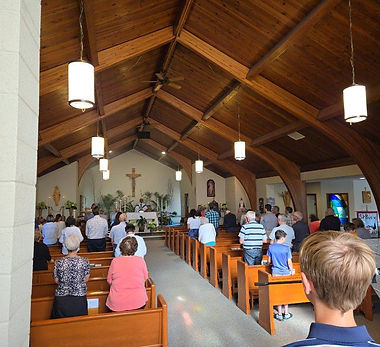
The prayer of the faithful is after the Gospel and the homily. By this prayer in which the people are to take part, intercession will be made for the holy Church, for the civil authorities, for all those oppressed by various needs, for all mankind, and for the salvation of the entire world.
The Lord is saying to the Church today, “…I have searched among them for someone who could build a wall or stand in the breach before me to keep me from destroying the land; but I found no one” (Ezek: 22:30). He tells us in Galatians 6:2 to “Help carry one another’s burdens; in that way you will fulfill the law of Christ”. To ‘bear’ means to lift with the idea of removing. As intercessors we are agreeing to help carry the burden of another until it is released. Intercession is a holy calling in the Body of Christ.
When the Holy Mass is over, we can still continue to be intercessors. Put on the eyes of faith when looking at an annoying person in the grocery line or anywhere. See him through the eyes of Jesus. Offer every waiting time and every act of inconvenience in your daily life to Jesus each day. Bring all these and offer to Jesus in the prayer of the faithful during the Holy Mass. Interceding for needy people is truly doing penance. We have the infinite power of God available through the power of prayer and faith. Finally, we ask for the gift of unconditional love, that we can live the love-life that was reflected in the Holy Family at Nazareth, thus bringing about justice and peace throughout the world.
liturgy of the eucharist
liturgy of the eucharist
presentation of gifts
12
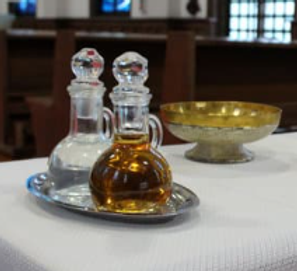
During the presentation of the gifts, representatives of the lay community bring up the bread and wine and other gifts to be received with the collection. They are all our gifts given back to God. The gifts of bread and wine, representing all of us, will be transformed into the real presence of Jesus Christ as His Body and Blood, Soul and Divinity.
As the priest receives the gifts of the Christian community – bread, wine and the collection – we should be mindful that we are now being called to give not only our support, but our whole selves in the offering of bread and wine and collection to God. The priest puts a little water in the wine after the Jewish custom that can represent for us the melting of ourselves into Jesus Christ in the Mass. As the water disappears into the wine, we blend into Christ Jesus. We offer all that we are – mind, soul and body. We should offer all that we possess, including family, health and marriage. Let’s give them to the Lord now.
Just imagine that this was the last Mass you would ever offer because of a terminal disease or any other reason. What surrender and abandonment would you feel at that moment? Try to capture that affection and disposition now at Mass. The last Mass that will be offered for us will be our funeral Mass. Then it will be too late; we will have passed into the light. If there is anything you cannot surrender to the Lord, then you do not possess it; it possesses you. All of us have something that we find difficult or impossible to give. Let us ask the Lord for His grace to give it to Him so that He can bless it and then give it back to us.
We come to Mass to unite ourselves to Jesus Christ in His great sacrifice. There is tremendous healing when we offer ourselves and make a sincere effort to be one with Jesus. The more we open ourselves to Jesus, the more His Holy Spirit can possess and fill us. Each Mass is a golden opportunity to become one with Jesus Christ.
liturgy of the eucharist
consecration
13
“Take this, all of you and eat it: this is My body which will be given for you”.
“Take this, all of you, and drink from it: this is the cup of My blood, the blood of the new and
everlasting Covenant. Do this in memory of Me”.
The consecration of the Mass should be seen in light of the Gospel readings from John 14-16. These are some of the most beautiful chapters in the New Testament. We are called not only to service, but also to consecrate our lives to God. Jesus loves us. “I am indeed going to prepare a place for you, and then I shall come back to take you with me, that where I am you also may be” (John 14:3). “The Paraclete, the Holy Spirit whom the Father will send in my name, will instruct you in everything, and remind you of all that I told you” (John 14:26). These
are but a few of the consolations Jesus gave to His Apostles. This knowledge of His love is a prelude to the consecration of bread and wine. As bread and wine are transformed into Jesus’ body and blood, there is a spiritual transformation in each person attending. When the consecration takes place, there is a tremendous sweep of Divine energy through the
congregation. At this most powerful moment the Holy Spirit would cleanse people.
Of all the Sacraments, the Eucharist is the climax because here Jesus Christ, the perfect image of the Father, gives Himself unto eternal life. Here He conquers that eternal NOW of self-immolation on the Cross, for love of us individually, all sin and death that exist within us. Here we must experience a sharing in His glorious Resurrection as his Spirit dissolves in us our lack of love for God and for neighbor.
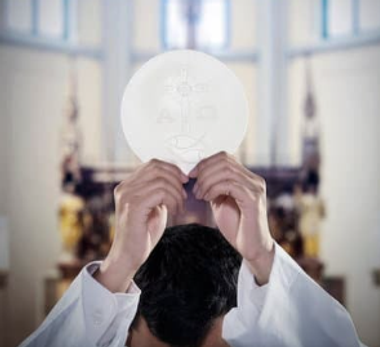
At this point the Lord directs us to bring to the Eucharist those we need to forgive. As the priest holds up the host during the consecration we see the face of each person on the Host. We ask the Lord to heal the relationships because they too were part of His body.
liturgy of the eucharist
communion rite: the lord's prayer "our father..."

14
We are invited to stand and pray to our Heavenly Father with Jesus, Mary our blessed mother and the saints, as He taught us. We approach the Lord in the attitude of repentance and humility, realizing our poverty of spirit while also rejoicing in the knowledge that we are sons and daughters, heirs to the kingdom. We are, “a chosen race, a royal priesthood, a holy nation, a people He claims for His own to proclaim the glorious works of the One who called you from darkness into His marvelous light” (1 Pet: 2:9). As we say the words “OUR FATHER …” we are going to Him arm in arm with our brothers and sisters around the world. God is “OUR” Father.
God, the great “I AM” has chosen to be our Father. He has chosen to create, nurture, teach, heal, provide for, protect, discipline and love each of us. He holds us in the palm of His hand and promises never to leave or forsake us and invites us into an intimate relationship with Him. We don’t need to be afraid of evil or anything because, we are walking with our Heavenly Father, in the name of Jesus, in the power of the Holy Spirit.
liturgy of the eucharist
breaking the bread
15
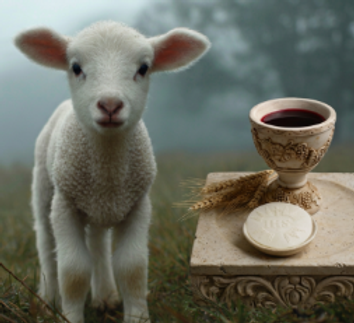
Lamb of God, you take away the sins of the world; have mercy on us.
Lamb of God, you take away the sins of the world; have mercy on us.
Lamb of God, you take away the sins of the world; grant us peace.
During the Mass I give to Jesus the particular helplessness over the situation, the thought, the memory, the circumstances, He transforms the powerlessness into joy, strength and courage. He reassures me that I am loved, just the way I am. He reassures me that He will take care of the problems. I can rest in His love, knowing that He is in charge of things. Deep within I hear the words, “I am changing your heart. I pour My love upon you and heal you.” I find that a simple act of trust and acceptance that Eucharist is Christ is the first step. Christ himself will change my heart of stone to a heart of love. This is love that is unknown to man by his own labor; it is a love beyond description and imagination; a love that all of us desire, deep, deep inside. The deepest desire of our heart is to receive that love because we have been created to receive that love. Each has a special place in the Father’s heart. In that special place He waits for us. In Eucharist the deep need for love can be filled. We are designed to be in the Father’s heart. In Eucharist our hearts can be cleansed from pain suffered. In Eucharist He washes away the hurt of childhood. Eucharists are the key to wholeness and holiness.
The experience of the Eucharist is individual, personal, and uniquely designed for each one of His children. “Lord Jesus Christ, with faith in your love and mercy, I eat Your body and drink Your blood. Let it not bring me condemnation, but health in mind and body”.
liturgy of the eucharist
communion
16
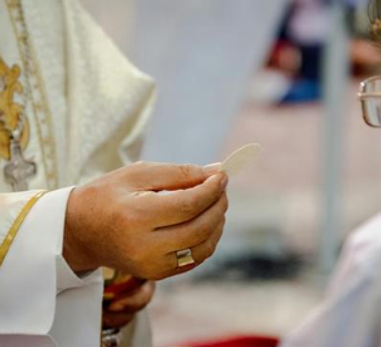
Behold the Lamb of God; behold him who takes the away the sins of the world.
Blessed are those called to the supper of the Lamb. --- Lord, I am not worthy that you should enter
under my roof, but only say the word and my soul shall be healed.
The Body of Christ --- Amen.
The Blood of Christ --- Amen.
Jesus said, “Let me solemnly assure you, if you do not eat the flesh of the Son of man and drink His blood, you have no life in you. He who feeds on my flesh and drink my blood has life eternal and I will raise him up on the last day” (Jn. 6: 53-54). Eternal life is a desire of the human heart. Parents want to keep the love and presence of their children forever. We desire everlasting love because God has placed that drive in our hearts. It is the urge of
self-preservation. Jesus fulfills this desire by saying we will never die ‘spiritually’ and can live with Him and the Father forever eternally.
As you come to the alter to receive Jesus, accept Him as your Lord and Savior. He is the Lord of the problem that is burdening you right now. What is the greatest problem in your life now? What is ruining your peace of mind? What is upsetting you?Agitating you? Your children? Your health? Your beliefs? An area of living? A compulsion that you can’t control? Is it finances? What is it? Bring it to the Lord. “If only I can touch His cloak … I shall get well”
(Mt: 9: 21). Jesus tells us that we don’t have to touch just the hem of His cloak – He says, “Take Me! Take all of Me! This is MY Body. This is MY Blood”. Do we realize what we are doing when we respond to the call to eat the Flesh of the Son of man and drink His Blood? This is the most precious time of our lives. We stand blended with the everlasting Father in Jesus Christ. “If you only recognized God’s gift …” (Jn: 4:10). When you walk forward to receive
communion, picture Jesus handing His own body and blood in the form of Host and wine. Say to
the Lord,
“May Your body and blood be my food and drink”.
litury of the eucharist
sign of peace

14
Let us offer each other the sign of peace.
The sign of peace says, in non-verbal and verbal ways, “I love you”. We are saying, “I want my relationship with God to flow through all my other relationships”. A sign of peace is a time to express that Christian love to those on either side, lovingly, reverently, as representative of the whole community. Because communion is a sign of our union with God and one another, we offer a sign of peace to those around us at that time. The great commandment is ‘love one another’. In the Mass, we express this love by our sign of peace.
liturgy of the eucharist
after communion
17
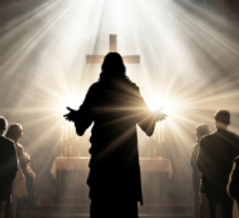
Close your eyes and focus on Jesus. Visualize Jesus standing at the altar. See light coming from the hands of Jesus into your heart – touching you right now, healing areas of hurt or need. Surrender; lose yourself in his permeating inner presence. “…the life I live now is not my own: Christ is living in me …” (Gal: 2:20).
Believe that the healing power emanating from Jesus is touching us, setting us free from guilt, doubt, self-hatred, and self-condemnation. Believe that he is doing a deep healing of the inner self and restoring self-esteem, self-love, and self-acceptance. Thank the Lord, because we believe it is being done to us according to our faith. God is love, and He wants to heal us more than we want to be healed. It is not a matter of being worthy. It’s true, we aren’t worthy, but that has nothing to do with the Lord’s healing.
We say, “Lord. If you want to, You can heal me”. He says, “I do want to. Be healed”. We must be aware that we can be healed, which we can do if we get beyond our feelings of unworthiness and accept ourselves. We feel unworthy, but His love overwhelms us. He wants to cut through feelings unworthiness, guilt, fear, resentment, bitterness, hatred, self-condemnation, lack of self-love – all the things that hold us back from truly embracing God as loving Father. He will cut through all that and release Living Water from our Spirits. The Lord wants us to recognize that we are in need of healing: He wants us to be aware that we can be healed: He wants us to accept His healing.
concluding rite
concluding rite
18
The Lord be with you -
and with your spirit.
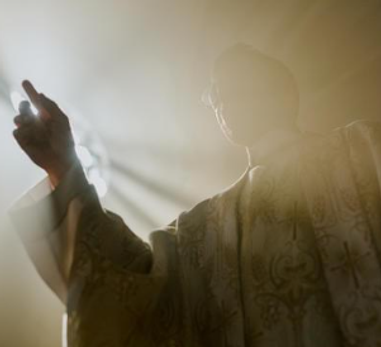
May almighty God bless you,
the Father, and the Son,
and the Holy Spirit.
What does “blessing” mean? Some definitions of blessing include: “to invoke Divine care for; to confer prosperity or happiness upon; to dedicate; to approve; to endorse”. As we reflect upon God’s covenant of blessing through Abraham and into the new covenant, we see that God has made tremendous provision for blessing His people. We all need to experience blessing. We need continually to receive it from our Heavenly Father, and we need to be givers of blessings to other. We need to know that we are deeply valued, that we are important. We need to communicate to others that they have high value.
We are called to carry that blessing to others, and thus extend the ministry of Jesus. There are people alive today who should be dead, but because there was someone who knew how to pray effectively, how to bless, they are still alive. Many people have been healed of alcoholism, drug addiction, mental illness and major physical diseases because of the prayers and the blessings.
Lord Jesus, we thank you that You have called us by name. You called us to Mass to heal us, to liberate us, to set us free. You called us to empower us to heal broken hearts. Lord, let our healing be so deep that we walk out of Mass new creations, new people, healed in body, mind and spirit. Thank You, Heavenly Father, for loving us so much. Thank you, Jesus, for not bearing to leave us, and thus sending the Holy Spirit. Thank you, Holy Spirit, for guiding us into the freedom of children of God. In the name of the Father, and of the Son, and of the Holy Spirit. Amen.
The Mass is ended. Go in peace to love and serve the Lord. -------- Thanks be to God.